
July 18, 2026
Do You Need a Bone Graft Before Dental Implants?
If you've been told you don't have enough bone for a dental implant, it's not the end of the road — and you're far from alone. Bone loss in the jaw is one of the most common reasons patients are initially turned away from implants, but a straightforward procedure called bone grafting can rebuild that foundation and make treatment possible. Here's an honest explanation of what grafting is, who actually needs it, and what to expect.
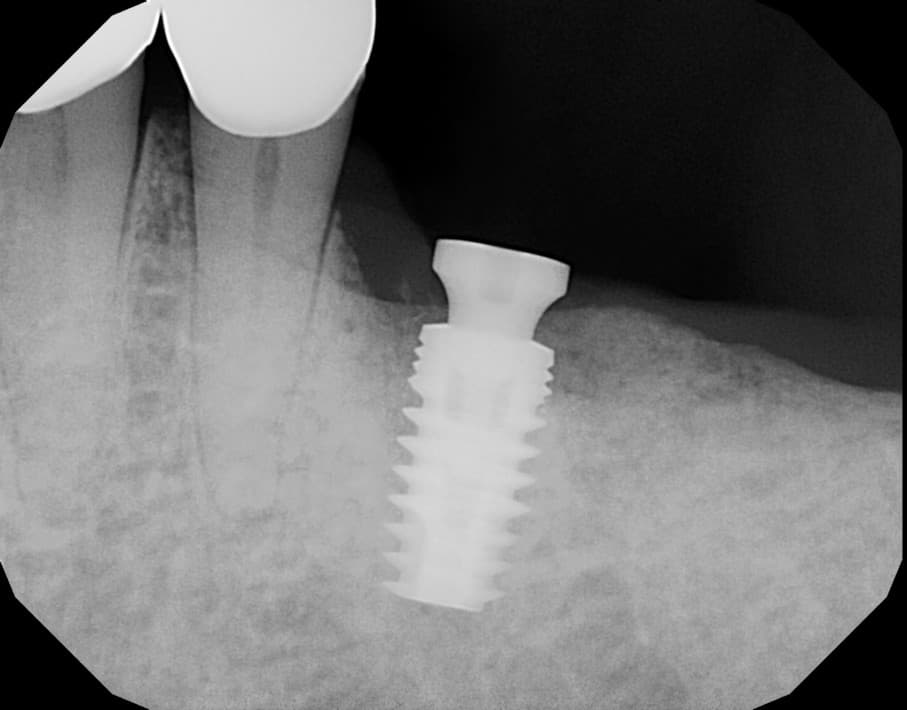
To understand grafting, it helps to know why bone disappears in the first place. Your natural tooth roots stimulate the jawbone every time you bite and chew. When a tooth is lost or removed, that stimulation stops, and the bone beneath the gap gradually resorbs — shrinking in both height and width. The longer a tooth has been missing, the more bone is typically lost. Since a dental implant needs a solid volume of bone to anchor into securely, insufficient bone is a genuine obstacle to placement.
Bone grafting rebuilds that lost volume. In the procedure, graft material is placed where bone is deficient, acting as a scaffold that your body gradually replaces with its own new bone over a few months. A closely related procedure, ridge augmentation, rebuilds the width and shape of the jaw ridge when it has become too narrow. Both are routine, well-established techniques, and at our Plano practice Dr. Patel often performs a graft at the same time as a tooth extraction — called socket preservation — to prevent bone loss before it starts and keep the site ready for a future implant.
Not everyone needs a graft. Patients who replace a tooth soon after losing it, or who have naturally good bone volume, can often proceed straight to implant placement. Grafting is most commonly needed when a tooth has been missing for a long time, after gum disease has damaged the surrounding bone, or when the sinus or nerve position leaves limited room to work with. The only way to know for certain is 3D imaging, which measures your bone precisely — Dr. Patel uses it to tell you honestly whether you need a graft or can move directly to your implant.
The procedure itself is more comfortable than most patients expect. Grafting is done under local anesthesia, with sedation available for anxious patients, and most people describe the recovery as milder than a tooth extraction — some soreness and swelling for a few days, managed easily with over-the-counter pain relief. The main investment is time rather than discomfort: the graft needs a few months to mature into strong, implant-ready bone before the implant is placed.
It's worth reframing grafting not as a setback but as the step that makes a permanent, natural-feeling tooth replacement possible when it otherwise wouldn't be. Compared with living long-term with a gap — which allows still more bone loss and can shift neighboring teeth — a graft protects your jaw and opens the door to the most durable solution in modern dentistry.
If you've been told you're not a candidate for implants because of bone loss, it's worth a second opinion. Dr. Patel will take the necessary imaging, explain exactly what your bone looks like, and lay out your options with no pressure. Call (972) 867-5185 or book online. We care for patients throughout Plano, Allen, Frisco, McKinney, Richardson, and the surrounding DFW area.
Related Services

Keep Reading
All-on-4 Dental Implants in Plano, TX: Is It Right for You?
All-on-4 can replace a full arch of teeth with just four implants. What it is, who's a good candidate, what the process looks like, and what it costs in Plano.
Read MoreSame-Day Dental Implants in Plano: How ‘Teeth in a Day’ Works
Can you really get an implant and a tooth in one visit? How same-day (immediate-load) implants work, who qualifies, what to expect, and how they compare to traditional staged implants.
Read MoreDental Implants vs. Dentures: Which Is Right for You?
Wondering whether dental implants or dentures are right for you? An honest breakdown of the costs, benefits, and candidacy for both options so you can make the best decision for your smile.
Read MoreHave Questions About Your Smile?
Schedule a consultation with Dr. Patel to discuss your options.